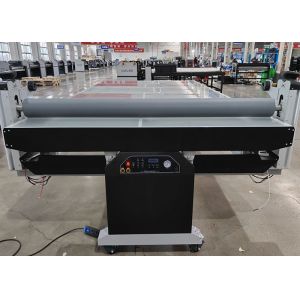
How Pneumatic Pressure Improves Flatbed Lamination Quality
Consistent pressure is one of the most important factors affecting
flatbed lamination quality.
When pressure is too low, the laminate may not make complete
contact with the graphic or substrate. When pressure is uneven,
bubbles, wrinkles, edge lifting, silvering, and inconsistent
adhesion may appear.
A pneumatic flatbed laminator uses compressed air to control the
pressure applied by the roller. This gives operators more stable
and repeatable pressure than a system that relies entirely on
manual adjustment.
For sign shops, large-format printers, display manufacturers, and
graphics companies, pneumatic pressure control can improve surface
quality, reduce rework, and make the lamination process easier to
manage.
What Is Pneumatic Pressure Control in a Flatbed Laminator?
Pneumatic pressure control uses compressed air to raise, lower, and
press the laminating roller against the material.
The operator can adjust the air pressure according to the type,
thickness, and sensitivity of the material being processed. Once
the pressure is set correctly, the system helps maintain a more
consistent roller force throughout the application process.
A pneumatic flatbed laminator commonly includes:
- An air compressor or compressed-air connection
- Pneumatic cylinders
- A pressure regulator
- A pressure gauge
- A silicone laminating roller
- Controls for raising and lowering the roller
The flatbed laminator listed on the website combines pneumatic
pressure adjustment with a silicone roller and infrared heating,
allowing operators to control pressure while processing sign and
graphic materials. oes Pneumatic Pressure Improve Lamination
Quality?
1. It Distributes Roller Pressure More Evenly
Uniform pressure helps the laminating film contact the graphic and
substrate across the entire working width.
With a manual system, pressure may vary because of operator
adjustment, material thickness, roller position, or mechanical
imbalance. A pneumatic system provides a more controlled downward
force, helping the roller maintain stable contact with the
material.
This is especially important when laminating:
- Large-format printed graphics
- Vinyl onto rigid boards
- Foam board
- PVC board
- Acrylic panels
- Aluminum composite panels
- Exhibition and display graphics
More uniform contact can help prevent areas of weak adhesion,
especially near the center or edges of large panels.
2. It Helps Reduce Air Bubbles
Air bubbles usually form when air becomes trapped between the
adhesive film and the application surface.
Correct pneumatic pressure helps the roller push air forward and
outward as the material passes beneath it. This creates more
complete contact between the adhesive and the substrate.
However, pressure alone does not guarantee bubble-free lamination.
Operators must also control:
- Roller alignment
- Application speed
- Surface cleanliness
- Film tension
- Material positioning
- Temperature, when heat-assist is used
A properly adjusted pneumatic flatbed laminator makes these
variables easier to manage and can significantly reduce bubbles
caused by insufficient or inconsistent roller pressure.
3. It Reduces Wrinkles and Creases
Wrinkles can occur when the laminating film moves unevenly,
stretches, or contacts the substrate at an inconsistent angle.
Stable roller pressure keeps the film in controlled contact with
the surface during application. This helps prevent sections of the
film from moving faster than others.
For large graphics, the combination of correct pressure, steady
speed, and accurate alignment is particularly important. Pneumatic
control allows the operator to focus on guiding the material
instead of constantly making manual pressure adjustments.
4. It Improves Adhesive Contact
Pressure-sensitive laminating films require sufficient contact to
bond effectively with the substrate.
If the roller pressure is too low, the adhesive may only partially
contact the surface. This may lead to:
- Poor edge adhesion
- Visible silvering
- Film lifting
- Inconsistent gloss
- Reduced durability
Pneumatic pressure helps press the adhesive into closer contact
with the surface. On lightly textured or uneven materials,
controlled pressure can also improve adhesive wet-out and reduce
visible imperfections.
For heat-assist applications, pressure and temperature should be
adjusted together. Heat can soften the adhesive, while roller
pressure helps establish contact. Excessive pressure or
temperature, however, may damage sensitive prints or deform
lightweight substrates.
5. It Handles Different Material Thicknesses More Consistently
Sign and print businesses often process materials with different
thicknesses during the same working day.
These may include:
- Thin vinyl graphics
- Flexible printed media
- Foam board
- Corrugated plastic
- PVC sheets
- Acrylic
- Composite panels
A pneumatic flatbed laminator allows the roller pressure to be
adjusted for different materials without relying entirely on
mechanical hand adjustment.
Thin or delicate materials generally require controlled, moderate
pressure. Rigid or slightly textured materials may require stronger
contact. The correct setting depends on the laminate, adhesive,
substrate, roller condition, and production speed.
Adjustable pneumatic pressure makes it easier to create repeatable
settings for frequently used material combinations.
6. It Improves Production Repeatability
Repeatability is essential in commercial lamination.
A sign shop may need to produce multiple panels with the same
appearance, adhesion, and finish. If roller pressure changes from
one panel to another, the finished products may not match.
A pressure regulator and gauge allow operators to record and reuse
suitable settings. This reduces dependence on operator feel and
makes the process easier to standardize.
For example, a production team can record settings according to:
- Material type
- Board thickness
- Laminating film
- Application speed
- Temperature
- Roller pressure
These production records help different operators achieve more
consistent results.
7. It Can Reduce Waste and Rework
Lamination defects can be expensive because the printed graphic,
laminating film, substrate, ink, and production time may all be
lost.
Common pressure-related defects include:
- Trapped bubbles
- Wrinkles
- Poor adhesion
- Edge lifting
- Uneven surface appearance
- Repeated application attempts
By improving pressure consistency, a pneumatic flatbed laminator
can reduce errors and help operators complete more jobs correctly
on the first attempt.
The result may include lower material waste, fewer rejected panels,
and more predictable production times.
Pneumatic Pressure vs. Manual Pressure
| Feature | Pneumatic Pressure | Manual Pressure |
|---|
| Pressure adjustment | Controlled through air pressure | Adjusted mechanically by the operator |
| Pressure consistency | More stable and repeatable | More dependent on operator experience |
| Large-format applications | Well suited to repeated production | Suitable for simpler or lower-volume work |
| Material changeover | Settings can be adjusted and recorded | May require repeated manual adjustment |
| Operator workload | Reduced during repeated jobs | More frequent intervention may be required |
| Production standardization | Easier to standardize | More difficult across multiple operators |
A manual flatbed applicator may be sufficient for occasional
applications or smaller production volumes. A pneumatic flatbed
laminator is generally more suitable when consistency,
productivity, and repeatable quality are priorities.
How to Set the Correct Pneumatic Pressure
There is no single pressure setting that works for every film and
substrate.
The correct setting depends on:
- Laminating film type
- Adhesive characteristics
- Substrate thickness
- Surface texture
- Roller hardness
- Roller condition
- Application speed
- Ambient temperature
- Heat-assist temperature
Start with a conservative pressure setting and test a small sample
whenever possible.
Check the finished surface for:
- Air bubbles
- Wrinkles
- Silvering
- Edge adhesion
- Roller marks
- Material deformation
- Print damage
If adhesion is incomplete, increase the pressure gradually. If the
substrate bends, the print becomes marked, or excessive resistance
occurs, reduce the pressure.
Always follow the film supplier’s application guidance and the
laminator manufacturer’s operating instructions.
Can Too Much Pressure Damage Lamination Quality?
Yes. Higher pressure is not always better.
Excessive roller pressure may cause:
- Compression marks
- Distortion of lightweight boards
- Stretching of flexible film
- Damage to sensitive printed surfaces
- Excessive adhesive squeeze
- Difficulty controlling material movement
- Premature roller wear
The objective is not to use maximum pressure. The objective is to
use enough controlled pressure to achieve complete and even contact
without damaging the film, print, or substrate.
Applications That Benefit From Pneumatic Pressure
Sign Making
Sign manufacturers can use pneumatic flatbed laminators to apply
printed vinyl and protective films to rigid sign panels.
Typical products include:
- Indoor signs
- Outdoor signs
- Directional signage
- Menu boards
- Retail displays
- Exhibition panels
Large-Format Printing
Large-format printing companies often laminate graphics to improve
appearance, handling, and surface protection.
Pneumatic pressure is useful for:
- Posters
- Mounted photographs
- Display graphics
- Promotional panels
- UV-printed boards
- Trade show graphics
Vinyl Mounting
Applying vinyl to a large rigid panel manually can be difficult. A
pneumatic roller provides controlled contact across the material,
helping the operator maintain alignment and push air out during
application.
Industrial Graphic Finishing
Businesses producing repeated graphic panels can use recorded
pressure settings to standardize production and reduce variation
between jobs.
What to Look for in a Pneumatic Flatbed Laminator
When comparing machines, evaluate more than the maximum working
size.
Important features include:
Adjustable Pressure Control
The machine should allow the operator to adjust pressure for
different materials and applications.
Clear Pressure Display
A visible gauge makes it easier to record settings and repeat
successful production parameters.
High-Quality Silicone Roller
The roller should provide stable contact without damaging the
graphic surface. Roller straightness, hardness, and surface
condition can directly affect application quality.
Accurate Roller Alignment
The roller should remain parallel to the flatbed. Poor alignment
may create uneven pressure across the working width.
Adjustable Speed
Variable speed helps operators match the application process to the
film, substrate, and complexity of the job.
Heat-Assist Capability
Heat assistance may improve adhesive contact in certain
applications, particularly in cool working environments or when
processing specific pressure-sensitive films.
Appropriate Working Width
Choose a machine that accommodates the largest panels normally
produced by your business, with sufficient additional space for
positioning and handling.
Safety Controls
Emergency stops, stable lifting mechanisms, and accessible
operating controls are important in a professional production
environment.
Why Choose MEFU Pneumatic Flatbed Laminator?
MEFU
pneumatic flatbed laminator is a practical choice for companies that need:
- More consistent roller pressure
- Better control over large-format applications
- Fewer bubbles and wrinkles
- Repeatable production settings
- Faster material changeovers
- Reduced dependence on operator strength
- Lower waste and rework
- Professional finishing quality
For sign shops, large-format printers, and graphics manufacturers,
a pneumatic flatbed laminator can provide better process control,
more consistent finished products, and less production waste.
To select the right machine, compare the working size, pressure
adjustment system, roller quality, speed control, heat-assist
capability, supported material thickness, and after-sales service.
Contact the MEFU team to discuss your material sizes, substrates,
production requirements, and recommended flatbed laminator
configuration.